It is a well known fact that people overvalue things they have put effort into; A homemade meal tastes better for the person who made it than for everyone else. The same, I would say, is true of our shooting. I am yet to meet a keeper or shoot owner who doesn’t think their shoot is better than the other places they visit each season. That doesn’t mean the best in every way, but certainly the best in some ways.

Whether it is because they do things how they like it at home and so are bound to enjoy it more, or because they are just delusional, who knows? In my mind, this is what makes the humble DIY shoot such a joy to be a part of.
From my own personal view, every pheasant shot at home is worth a hundred shot elsewhere, which is a good thing considering we only shoot twenty or so per season. That hasn’t always been the case though; before I was born, my grandfather used to put down 600 birds per year and would use the ‘shoot’ to entertain Cornish friends and those from ‘up country’. He, like the rest, used to think his guests were lucky to receive the invite to maybe pull the trigger, even though several of the visitors had much larger shoots of their own…
Every pheasant shot at home is worth a hundred shot elsewhere
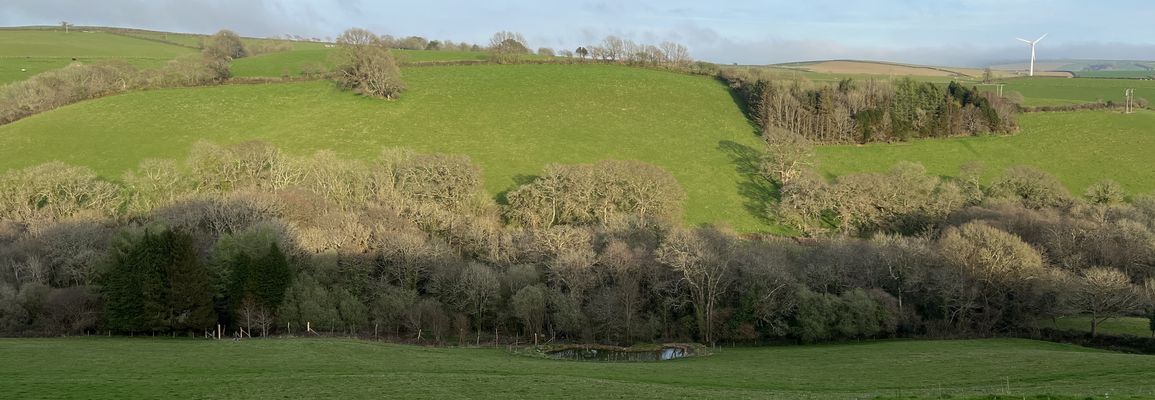
When he stopped farming, he had asked one of his friends at the then Game Conservancy to help him plan out some drives to improve their walk-around. We are incredibly lucky from a shooting point of view (less so when it comes to farming) to be positioned in one of the steepest valleys in the area with a strip of woodland at the bottom.
The woodland creation grants in the late 80s together with a few fields on the set-aside scheme provided cover for the birds at the top of the hills while the wooded valley bottom was the suggested location for the release pens. An extra couple of drives were taken from a much larger neighbouring estate with rent in the form of one lamb per year, and with some trial and error, a small shoot was set up.
Modest returns
Even though we’ve been shooting ever since, in 2003 the game book shows “NO BIRDS PUT DOWN FROM THIS DATE ONWARDS”. Now we shoot two or three times per year, a typical bag being something along the lines of:
- 5 pheasants
- 3 duck
- 7 woodcock
- 2 jays
- 3 squirrels
- 1 pigeon
- 1 fox
When, a few years ago I was offered a handful of ducks by a friend of mine, I considered it the perfect time to begin to resurrect the Kingole Farm Shoot.
Our start was less than perfect. In year one, we released our dozen ducks onto the river with a spin feeder. We didn’t shoot any of them. Undeterred, in year two we dug a pond, and released 25 ducks. We also released 50 grey partridge and 10 redlegs. Our returns that year were marginally - and I mean marginally - better: 6 ducks, and no partridge.

In the third year we released 25 ducks and 25 redlegs, accounting for 11 of the quackers and two of the partridge. Finally, in year four, we released 25 ducks, and fifty pheasants, and by the end of the season we had shot 18 ducks and 5 pheasants.
Learning the lessons
You’ll notice that things have improved, albeit very slowly indeed. We learned some important lessons, namely that partridge far prefer our neighbour’s arable farm to our grassland, and that if you over-feed your ducks, they’ll disappear when shot at. Nonetheless we’ve had some great times over the last few years, scheming and dreaming about improvements we could make and celebrating every addition to the bag we’ve achieved.
This year though, we’ve decided to take another step towards what the shoot used to be and invest in a new pheasant pen. The thinking is that if we start now, maybe in a decade or so we’ll have learnt enough lessons to have a day where every guest at least lets their gun off each day. You never know!
Planning a pheasant release pen
The first stage then was to plan out our pen. According to GWCT stocking density guidelines, you should release no more than 400 birds per acre of pheasant pen. For the sake of efficiency when buying rolls of wire, we marked out a 40x60 area - just over half an acre, suitable for 200 birds.
I then got in touch with Collins Nets who wrote a great article for ShootHub a few years ago on how to build a pheasant pen. Speaking to Chris at Collins Nets, all I had to do was tell him the dimensions, and he put together a pallet of everything I needed.
When stock fencing we buy our materials from a local farm supplies shop, but inevitably either under or over order. That’s not too much of a problem with stock fencing as we always have another job to do so any excess can be reused quickly. With this release pen though, we wanted to be as efficient as possible and keep the costs as low as possible, so Chris’s help was invaluable.

Equipment and materials for building a pheasant pen
- Jumbo semi-rigid fencing 1.2 mtrs x 100 mtrs (4ft)
- Heavy galvanised wire netting 1200 mm x 25 mm x 1.2 mm (4ft)
- 2.5 mm Straining wire - 640 mtr coil/25kg
- 7" U metal securing pins
- 4 Fox Grid - Pop Hole
- Simes Fencing Tool
- Galvanised Steel A18 Hog Rings for Fence Tool
- 40 mm Staples - 1 Kg
- Ratchet Winder Wire Tensioner
- Electric fence wire (7 strand) - 200 mtrs
In addition to this order, the only materials we needed were fence posts and electric fence posts - everything else was delivered on one pallet within 48 hours. They even threw in enough staples and hog rings!
With all the clobber assembled we were ready to start work. Watch this space for part two - how it all panned out, what mistakes we made and the lessons I learnt.
Comments
Loading comments…
Post a comment
to post a comment.